Night Patrol
Always On Watch
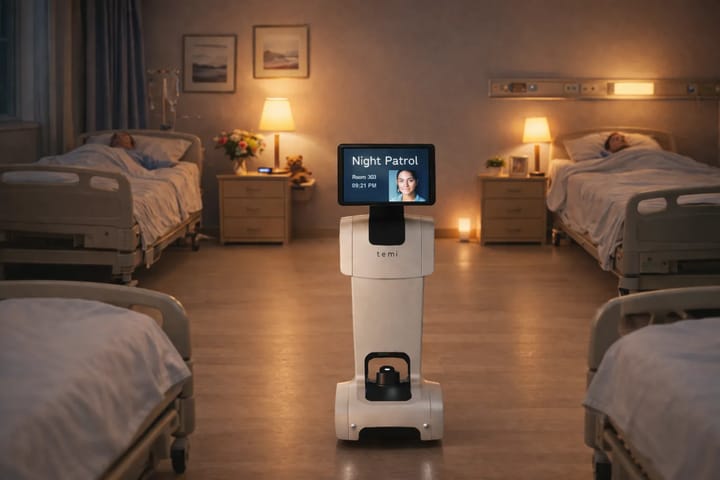
Temi autonomously patrols hospital wards at night, enabling remote monitoring, improving patient safety, and reducing overnight workload for healthcare staff.
Request a Demo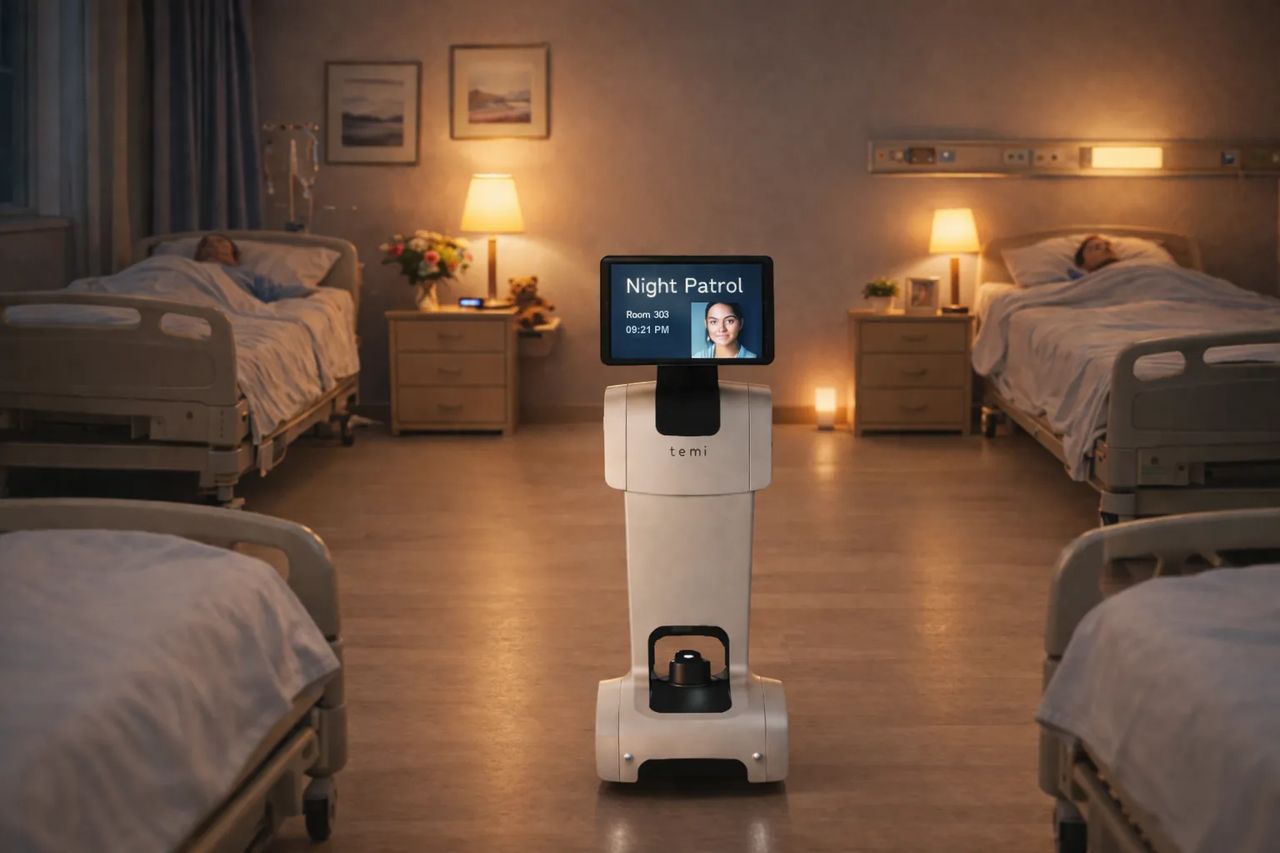
Feature highlights
Key capabilities
- Autonomous night patrol and ward rounds
- Real-time video monitoring and communication
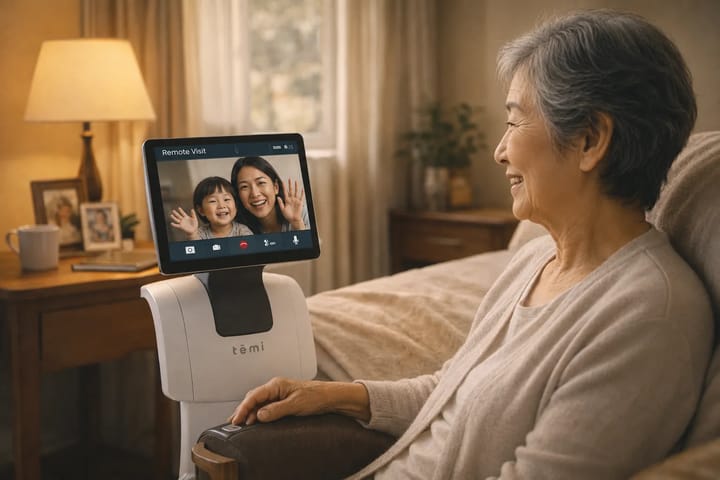
- Remote nurse check-ins and patient interaction
- Alert notification for unusual activity
- Reduces night shift workload and improves safety coverage
How it fits the workflow
Always On Watch
During late-night hours when staffing is limited, Temi autonomously patrols hospital wards, providing real-time video access and remote communication for nurses. The robot helps monitor patient conditions, detect unusual situations, and respond quickly when needed. By handling routine night rounds, Temi reduces staff workload while improving patient safety and hospital operational efficiency.
Suggested use cases
Where Night Patrol can be deployed
- Hospitals night ward rounds
- Senior living and nursing homes
- Rehabilitation centers
- Isolation wards
- Post-surgery monitoring wards
- Long-term care facilities
Why it matters
Always On Watch.
At night, hospitals face reduced staffing levels but still require continuous patient monitoring and rapid response capability. Temi acts as a mobile night patrol assistant, autonomously navigating through hospital wards while providing real-time video connectivity to nurses’ stations. Healthcare staff can remotely check on patients, communicate instantly, and respond to alerts without physically walking through every room. This not only reduces the physical workload of night shift nurses but also improves safety by ensuring consistent patrol coverage throughout the night. Temi can patrol multiple rooms, monitor patient movement, and provide immediate communication when attention is required. The result is a safer, more efficient night shift environment for both patients and healthcare professionals.