Smart Shelf Audit
Know What’s Missing
Temi Blackjack autonomous shelf auditing provides real-time visibility into inventory gaps without interrupting in-store operations.
Request a Demo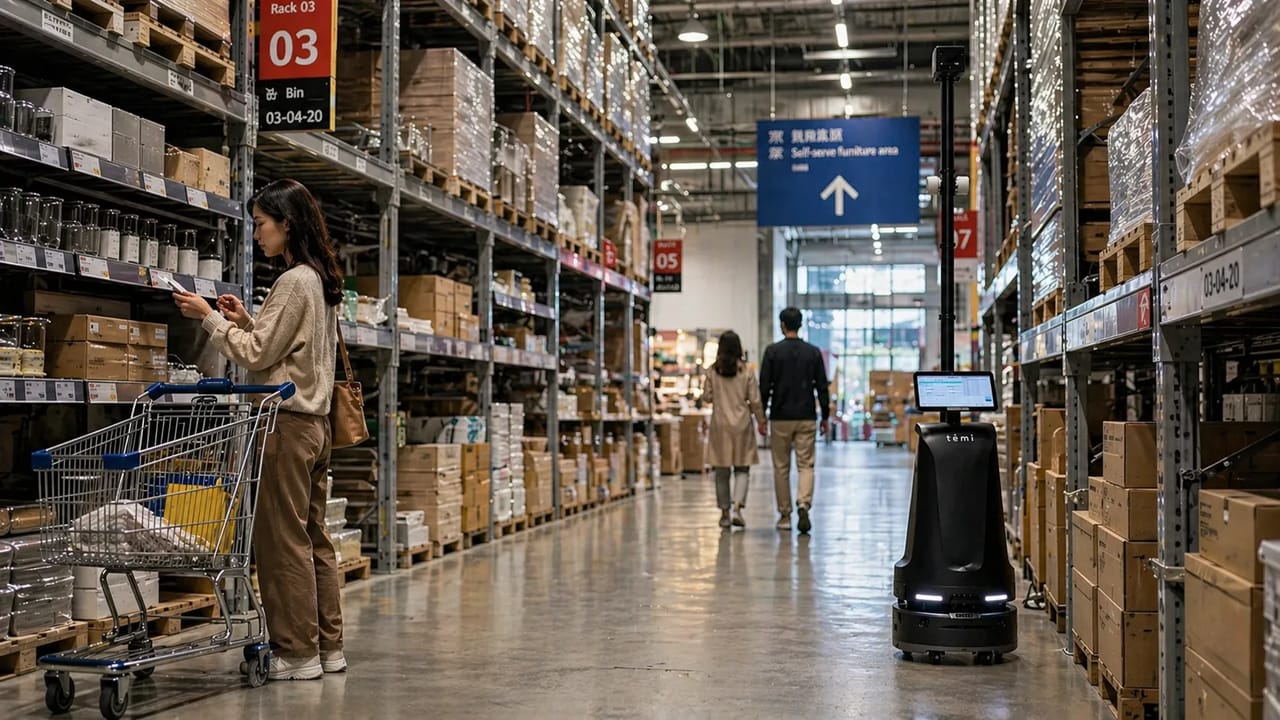
Feature highlights
Key capabilities
- Autonomous aisle navigation with obstacle avoidance
- Extendable mast for high-shelf inspection
- Real-time missing SKU detection
- Silent operation within active retail environments
- Continuous automated inventory auditing
How it fits the workflow
Know What’s Missing
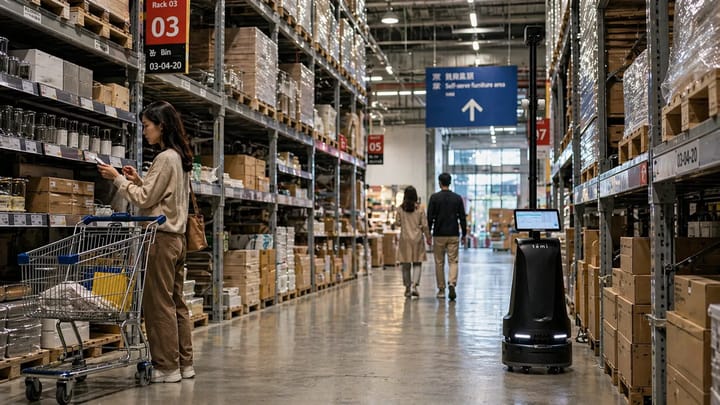
Blackjack Mini performs continuous shelf audits by autonomously navigating store aisles and scanning multi-level racks. Its extendable sensor system detects out-of-stock items in real time and sends SKU-level alerts directly to store systems. Unlike manual checks that require ladders and disrupt traffic, Blackjack Mini works quietly alongside shoppers, maintaining inventory accuracy without affecting the in-store experience.
Suggested use cases
Where Smart Shelf Audit can be deployed
- Warehouse-style retail (IKEA, Costco)
- Large supermarkets and hypermarkets
- High-shelf inventory environments
- Smart retail operations and analytics
- Multi-store inventory standardization
Why it matters
Know What’s Missing.
Maintaining accurate shelf availability in large retail environments is both critical and resource-intensive. Blackjack Mini transforms this process through autonomous shelf auditing, continuously patrolling aisles and scanning inventory across multiple shelf levels using its extendable sensor mast. As it operates, the system detects missing or misplaced products and instantly reports SKU-level data to backend systems, enabling faster and more precise replenishment decisions. This eliminates the need for manual inspections that often require ladders, interrupt shopper flow, and consume staff time. By working quietly in the background, Blackjack Mini ensures that customers can shop uninterrupted while store teams gain reliable, real-time inventory insights. The result is a more efficient, data-driven retail operation with improved product availability and optimized workforce allocation.